

Millennia-old pottery shards reveal cross-Straits and South Pacific ties in Pingtan, China
en.ptnet.cn | Updated:2025-11-21 | Lin Kongbo, StephaniePingtan, a coastal region in Fujian Province eastern China, has emerged as a key archaeological hub shedding light on the origins and spread of the Austronesian-speaking peoples. Recent excavations at the Keqiutou Site Group, a cluster of Neolithic shell mound sites dating back 7,500 to 3,000 years, have uncovered crucial artifacts that bridge cultural and genetic connections across the Taiwan Straits and beyond.
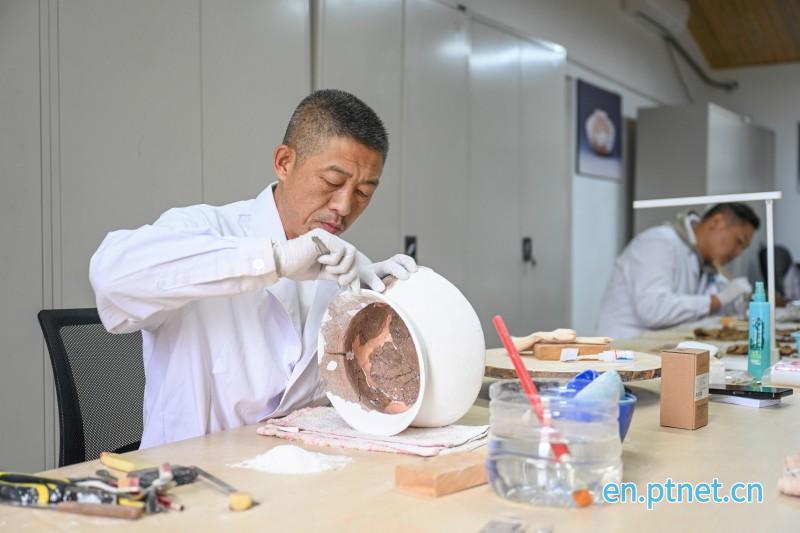
In the conservation lab of the Pingtan International Austronesian Research Institute, archaeologist Liu Junxiang carefully cleans a restored sand-tempered pottery jar. Pieced together from shards unearthed at the Xiying Site, one of the Keqiutou cluster, the jar features intricate impressed patterns that have been preserved through meticulous work. "We use an integral extraction method, first transporting soil blocks containing shards to the lab before conducting layer-by-layer cleaning, matching, and reinforcement " Liu explains. "Transforming fragments into a complete vessel takes 10 to 15 days of delicate work and it's not just technical restoration but the revival of a cultural memory."
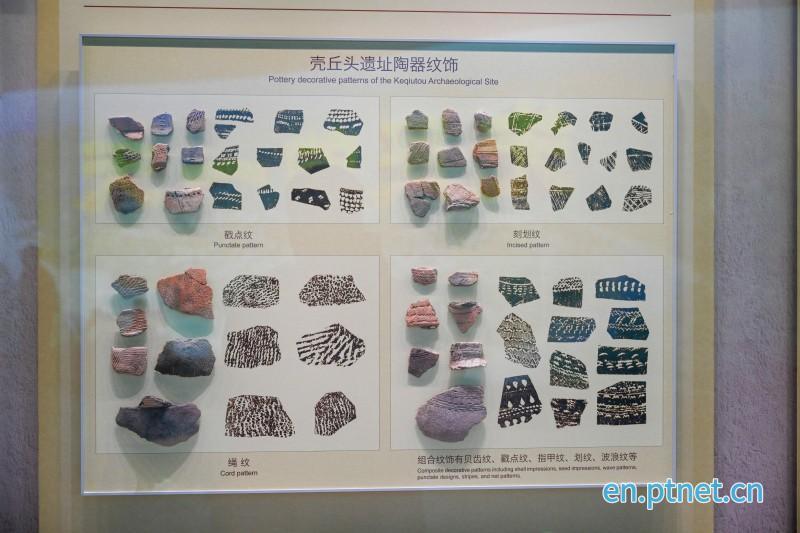
The Keqiutou Site Group, recognized as one of China's top ten archaeological discoveries of 2023, offers a continuous sequence of prehistoric culture along the southeastern coast of China. Its pottery decorations including shell-tooth patterns, punctate designs, and cord marks bear striking similarities to those found at Taiwan's Dabenkeng Site and Kinmen's Fuguodun Site. "These shared decorative styles confirm the deep-rooted cultural bonds across the Taiwan Straits," notes Xiao Kexin, a guide at the Keqiutou Site Museum. Additionally ancient DNA analysis of 7 300-year-old human remains from the Xiying Site indicates genetic links with populations in southern China and Southeast Asia solidifying Pingtan's status as a critical area for global Austronesian research.
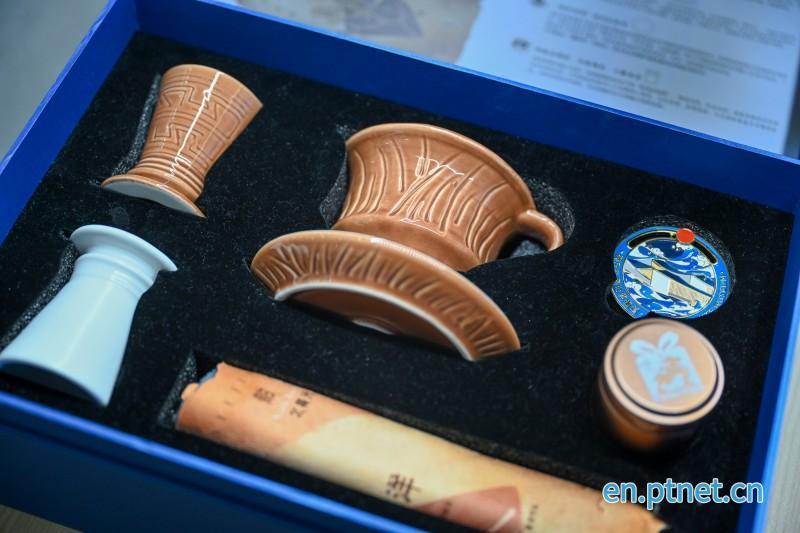
Building on these archaeological breakthroughs, Pingtan has integrated its cultural heritage into tourism and daily life. The Keqiutou Site Museum uses virtual reality to recreate ancient mariners' voyages while an MR project at Tannan Bay weaves Austronesian elements into night scenes featuring the region's famous "blue tears" bioluminescence. Cultural and creative products such as coffee mugs modeled after ancient pottery and canvas bags printed with shell-tooth patterns have also brought these millennia-old artifacts closer to the public.