
Pingtan's blue tears bloom early for a romantic early spring in 2026
en.ptnet.cn | Updated:2026-03-17 | Lin Kongbo, StephaniePingtan, a coastal gem on the west bank of the Taiwan Straits and a renowned international tourism island in Fujian Province, boasts stunning marine landscapes and serves as a vital hub for cross-Straits exchanges. The island's iconic blue tears phenomenon, the mesmerizing bioluminescent display by Noctiluca scintillans, has made an unexpected early appearance in 2026, offering visitors a unique romantic experience far ahead of the usual season.
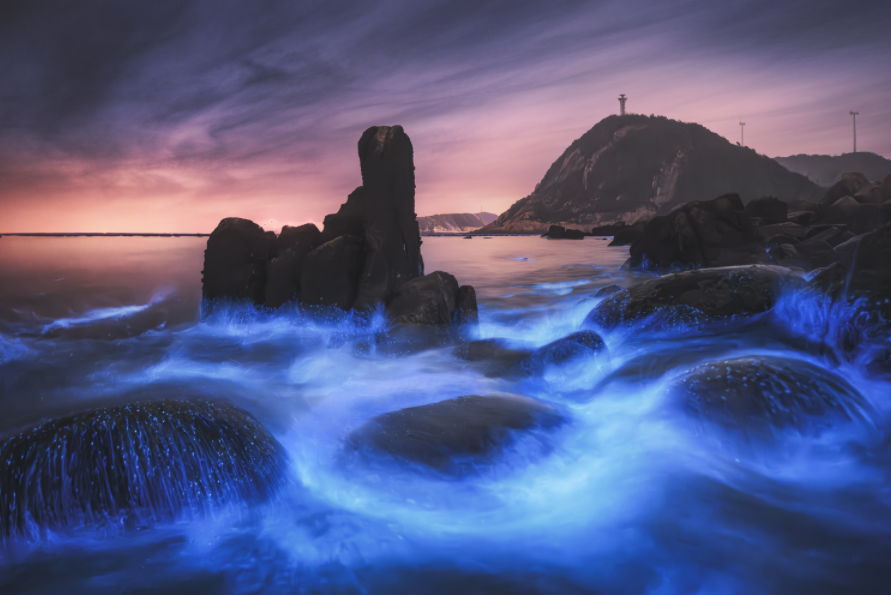
Photographed by Lin Zhanpeng
The enchanting blue glow first appeared in local coastal waters in late January 2026, and the spectacle then made a comeback in mid-March, drawing numerous visitors to the bioluminescent wonder. Since the blue tears only appear in March in previous years, the early spectacle took social media by storm as lucky tourists shared stunning images and footage of the shimmering blue sea.

Photographed by Lin Zhanpeng
Zhang Liying traveled from Zhejiang Province to Pingtan with her family for Chinese New Year, never expecting to witness the blue tears. "We came for the stone houses and seafood," she said. "Seeing the blue tears this early felt unreal—more lasting and dreamy than any firework. It was like the sea prepared a quiet, grand New Year's greeting just for us." What began as a routine holiday became her family's most unforgettable Spring Festival memory.
Chen Yu, a senior university student from Hubei Province, traveled to Pingtan with roommates for their graduation trip, and the blue tears was the whole point of the journey. After failing to spot the glow at several popular local beaches for two nights, they tried their luck at a coastal village on a homestay owner's suggestion—and finally spotted faint but unmistakable blue flickers in the waves. "Chasing the blue tears is like life—when you lower your expectations, surprises come to you," Chen sighed, calling the encounter the perfect gift for their coming-of-age.
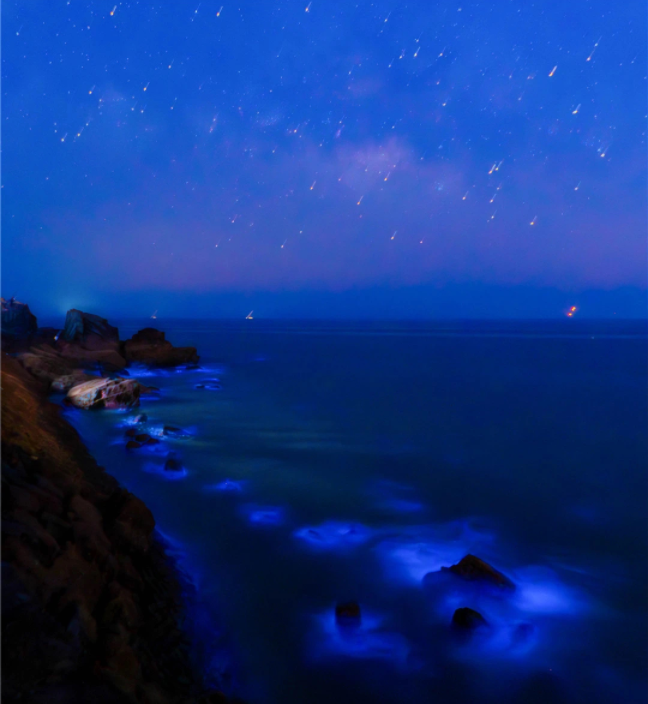
Photographed by Guan Jun
A family from Guangzhou also turned the trip into a vivid marine science lesson. Lin, a mother, explained the Noctiluca scintillans to her daughter Xinxin when they saw the glowing sea, comparing the tiny creatures to fireflies that light up when they touch the waves. Xinxin delightedly dipped her hand in the water, creating ripples of blue light. "This trip not only showed her the grandeur of the sea and planted a romantic seed of marine mystery in her heart," Lin said.
Jiang He, from Shanxi, works in Fuzhou and came to Pingtan with her boyfriend in February. They came across the blue tears in the northern coast when they heard crowds talking. "I never imagined seeing the blue tears in February, in the cold wind," Jiang said, her voice trembling with excitement. "It was as if the stars had fallen into the sea. It felt like a dream."

Photographed by Chen Yunguo
Lin Yanting, deputy director of the Pingtan Meteorological Observatory, explained the early appearance of the blue tears, noting that light winds help Noctiluca scintillans gather near the shore without dispersing, and proper wave disturbance triggers the visible bioluminescence. "Simply put, the perfect combination of favorable weather and geographical conditions made this blue firework bloom ahead of schedule," she said.
To keep up with surging interest, the observatory has upgraded its services—building a probability prediction model that analyzes meteorological and marine data using machine learning. Essentially, they're now forecasting the sea's mood.
Note: All photos are exhibited works from the "Island of Starry Seas and Romance" Blue Tears Photography Contest.


 Fujian Public Security Registration Code: 35012802000271