
Pingtan's drone industry soars with algorithm innovation
en.ptnet.cn | Updated:2026-04-03 | Lin Kongbo, Stephanie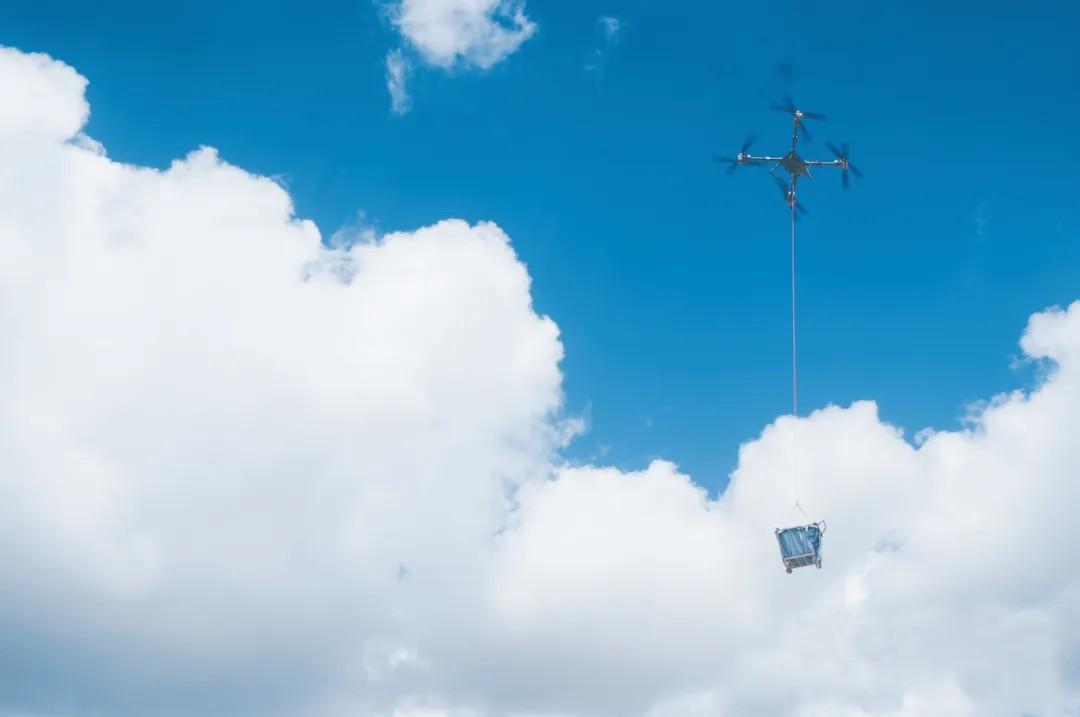
Pingtan, an island hub at the heart of the Taiwan Straits and a key zone for cross-Straits economic and technological cooperation, is emerging as a vibrant player in China's low-altitude economy, with local drone enterprises carving out a differentiated development path through cutting-edge algorithm research and development.
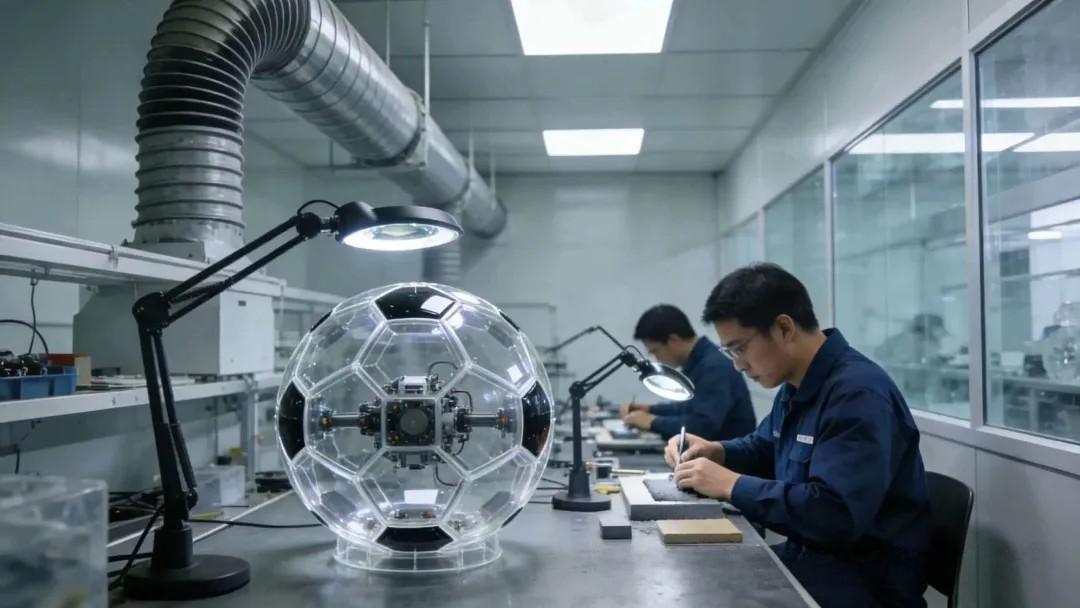
Recently, more than 100 football-shaped drones used in the 2026 Greater Bay Area Exchange of the International Youth STEM Education Competition, held in Foshan, Guangdong, were manufactured by Taxiu UAV Technology Co., Ltd., based in Pingtan. Inside the company's production workshop, an intelligent production line integrating industrial robots and automated systems is in full operation, with robotic arms accurately assembling circuit boards around the clock. The line, equipped with five-axis CNC machine tools and SCARA robots, enables the whole-process operation from core component processing to finished product inspection and packaging, adapting to the production of various drone specifications.
Lin Hong, chairman of the technology company and a former programmer who spotted the huge economic opportunities in the low-altitude economy, said the startup chose not to follow the old path of traditional drone enterprises that compete on supply chains and prices. "We have to find a differentiated track to overtake others," he noted. Drones are most vulnerable to complex flight environments, and most peers solve this problem by upgrading hardware and using traditional algorithms, but Lin Hong aimed to design more sophisticated algorithms to make drones "smarter" and more stable in flight.
Pingtan, the only place in China with the combined conditions of strong winds, high humidity, high salinity and island terrain, became the perfect test ground for the team's algorithm research. "We have to test in the harshest conditions! If our algorithms can conquer Pingtan's winds, we can fill the industry's gap in wind resistance technology," Lin Hong said. In April 2025, Taxiu UAV settled in Pingtan and built a test base here. Lacking existing wind field data for reference, the team launched high-frequency, high-intensity field flight tests, testing more than 100 drone models on the market over three to four months. Wind speeds reaching critical levels caused frequent flight malfunctions, crashes and sea falls, with an equipment loss rate of up to 60%, but the massive data collected laid a solid foundation for algorithm development.
Wu Junfan, chief technology officer of the company, explained that Pingtan's winds have unique and tricky characteristics: ground-level winds carry gravel and are abrasive, while sea winds bring moisture and salt, increasing flight resistance and causing a sharp rise in power consumption. These details are the "invisible killers" affecting drone stability. The team carried out two-pronged work: continuously collecting sample data to enrich the database, and feeding the data into computers to build algorithm models with AI assistance in the lab. After repeated revisions of code and iterations of models, the team developed the first version of the UAV anti-sway algorithm with dynamic compensation, the "brain" of the drones.
In August 2025, the company launched its first product, the TF (KF)-150 heavy-lift hoisting drone, empowered by the exclusive algorithm. The drone can carry a maximum load of 150 kilograms and resist level 7 winds, and was officially released only after completing more than 100 hours of actual flight verification. "This proves that the algorithm has basically solved the problem of balancing flight stability and endurance under different wind conditions, greatly improving the drone's attitude stability and hovering accuracy," Wu Junfan said. The team has applied for four invention patents related to the UAV anti-sway algorithm.
The market response has exceeded expectations, with the first batch of orders fully booked and production plans covering the entire year. Faced with supply shortages, the enterprise has cooperated with factories in Guangdong for joint production, with a projected monthly output of about 1,000 drones. To date, Taxiu UAV has launched more than 10 products, applied in agricultural and forestry plant protection, power inspection, remote sensing and mapping, and obtained key qualifications including the Civil Unmanned Aerial Vehicle Operation Certificate.
The outline of the 15th Five-Year Plan for National Economic and Social Development emphasizes expanding the space for marine economic development and promoting the healthy and orderly development of the low-altitude economy, as well as implementing demonstration actions for large-scale application of new technologies, products and scenarios. Pingtan is now vigorously laying out the full-space unmanned system and low-altitude economy industry, boasting broad development prospects. Lin Hong said the company will continue to increase R&D investment, establish in-depth cooperation with university teams such as Xi'an University of Technology, and jointly tackle a number of cutting-edge industrial technologies, with the goal of building a complete low-altitude economy industrial chain integrating production, R&D and application in Pingtan.


 Fujian Public Security Registration Code: 35012802000271