
Pingtan opens fast-track certification channel for Taiwan massage practitioners
en.ptnet.cn | Updated:2026-04-25 | Lin Kongbo, StephanieLocated off the coast of Fujian Province and facing the Taiwan Straits, Pingtan is China's only comprehensive pilot zone dedicated to cross-Straits integration and is also emerging as the country's second International Tourism Island. The island has recently made a breakthrough in professional certification, allowing practitioners from Taiwan to directly exchange their qualifications for mainland-recognized credentials.
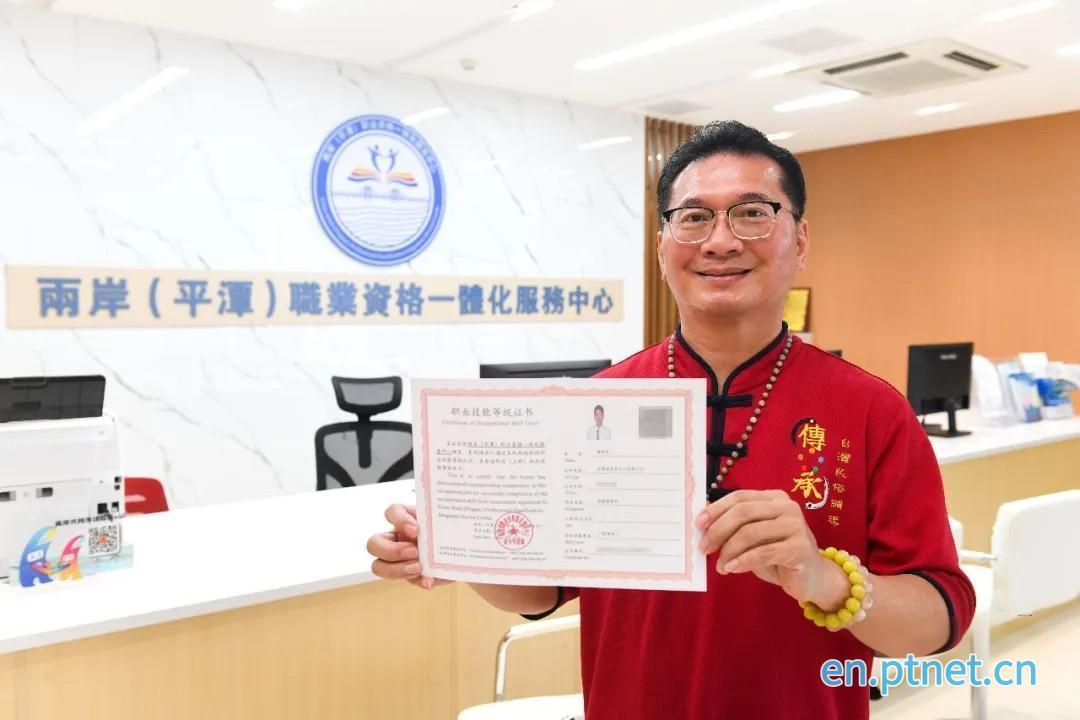
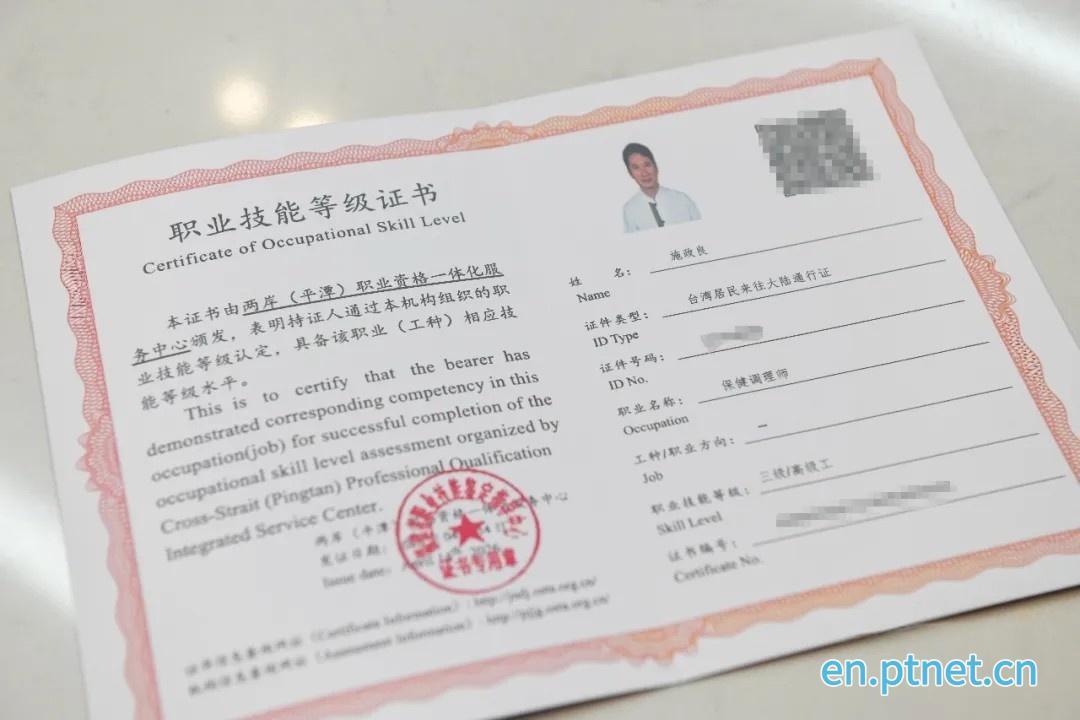
Clutching a newly issued red certificate, practitioner Shi Zhengliang described the moment as "long-awaited." The document, labeled "vocational skill level certificate," confirms his status as a senior-level health therapist on the Chinese mainland. It marks the first time that traditional massage practitioners from Taiwan have been granted a direct pathway to equivalent mainland certification.
Behind this milestone lies a significant policy shift. Shi previously held a Taiwan-issued certificate in traditional therapy and manual adjustment techniques, a category that had not been included in the mainland's direct recognition system. Last year, six new Taiwan vocational qualifications were added to the mainland's recognition list, with this category incorporated nationwide in a single step, allowing eligible applicants to obtain equivalent certificates without transitional procedures.
Shi, a senior board member of a Taiwan-based association promoting traditional therapy techniques, operates two massage clinics and has been working across the Straits since 2016, when he established a consulting company in Fuzhou. Despite his experience, he faced a persistent obstacle: his Taiwan credentials were not recognized on the mainland.
"Massage techniques on both sides share the same roots, but differences in certification standards limited our ability to work and start businesses here," he said. "Getting certified again meant high costs, frequent travel, and a lot of time." He spent years advocating for mutual recognition.
The turning point came in Pingtan. To bridge systemic differences in professional standards, local authorities—with support from Fujian provincial agencies—introduced a structured evaluation mechanism. Experts from institutions such as Renmin University of China and Feng Chia University conducted detailed comparisons of certification systems, focusing on assessment methods, practical training, and technical foundations rather than just certificate titles.
"This rigorous evaluation ensures the credibility and scientific basis of recognition," said Wang Kuifeng, a staff member at the Cross-Straits Vocational Qualification Integration Service Center in Pingtan. During expert reviews, supporting materials such as comparative demonstration videos of massage techniques were presented to verify their shared origins, leading to official recognition.
Shi's success is seen not only as a personal achievement but also as a reflection of Pingtan's broader efforts to facilitate cross-Straits integration. The process gained further momentum with the implementation of a Fujian provincial regulation promoting common standards across the Straits, which took effect on January 1. The regulation provides legal backing for initiatives that support employment and entrepreneurship for Taiwan residents in Fujian.
Building on this framework, Pingtan has established a dynamic system to expand recognition to more professions, particularly in emerging and specialized sectors. Officials say the goal is to adapt to evolving industry needs rather than apply rigid criteria.
As China's only cross-Straits pilot zone, Pingtan is focusing on long-term integration by removing structural barriers. So far, the island has recognized 189 qualification items, 66 of which are now promoted nationwide, helping more than 6,300 Taiwan residents obtain certification.
With his new credential in hand, Shi is already planning his next step. He is preparing to launch a training program for young people from Taiwan, offering two-week internship opportunities in Pingtan and across Fujian Province.
"I hope this platform will help more young people avoid unnecessary detours and find opportunities to build careers here," he said. "It's about helping them settle in and grow."


 Fujian Public Security Registration Code: 35012802000271