
Cross-Straits scholars gather in Pingtan to explore Austronesian roots and maritime culture
en.ptnet.cn | Updated:2026-05-15 | Lin Kongbo, StephaniePingtan, an island off the coast of Fujian province and the Chinese mainland's closest place to Taiwan Island, hosted a cross-Straits dialogue on maritime culture on May 12, bringing together scholars and cultural experts to discuss Austronesian heritage, cultural identity and future cooperation across the Taiwan Straits.
The 2026 Cross-Straits Maritime Culture Exchange Platform featured two parallel roundtable discussions focusing on cultural origins and shared development. Participants explored historical connections between communities on both sides of the Straits while also discussing cooperation in tourism, youth engagement, rural revitalization and cultural industries.
The event highlighted Pingtan's growing role as a hub for Austronesian studies and maritime cultural exchange. Researchers and experts used the forum to examine how shared traditions, migration history and seafaring culture continue to shape cross-Straits ties today.
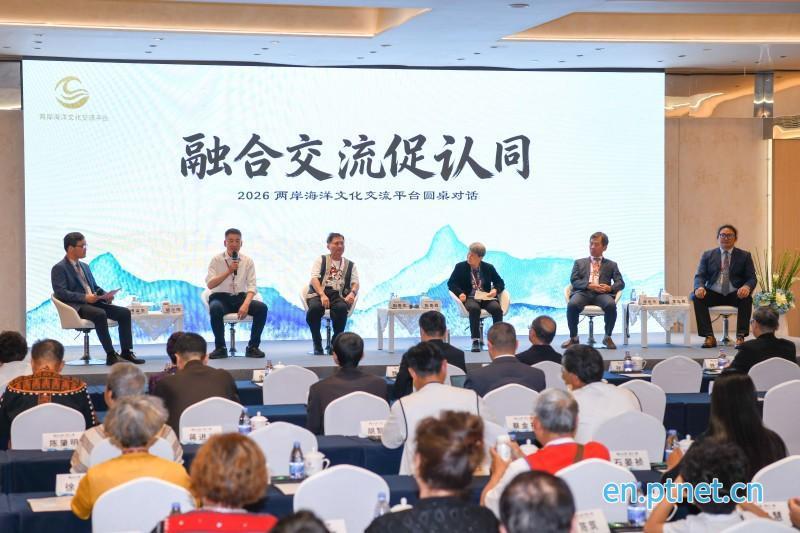
One of the discussions, themed around cultural roots and identity, focused on Austronesian ancestry, the preservation of minority cultures and historical links between Fujian and communities across the Taiwan Straits. Speakers said the exchanges reinforced a shared understanding that cultural roots and historical ties between the two sides remain deeply connected.
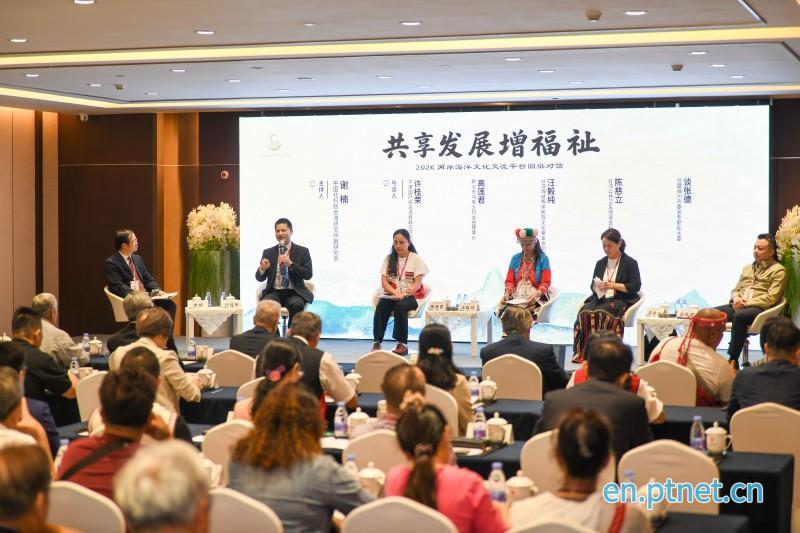
The second roundtable centered on development and cooperation. Participants discussed ways to turn cultural exchanges into practical benefits through collaboration in marine tourism, community development and youth programs.
Xie Nan, a researcher at the Institute of Taiwan Studies under the Chinese Academy of Social Sciences, said cultural resources could become a driver for future development if more room is created for innovation.
"To transform culture into development momentum, the creativity of every participant must first be encouraged," Xie said. "Government departments should also build more platforms and create more opportunities for cultural innovators."
Liao Shijie, chairman of the Chinese Ethnic Minorities Economic and Cultural Development Association, spoke about the cultural symbolism of snake totems among some ethnic communities in Taiwan. He noted that the character "虫" in the abbreviation for Fujian province, "闽," historically referred to snakes in ancient Chinese culture.
"The snake worship traditions found among groups such as the Amis people share cultural roots with some ethnic communities on the mainland," Liao said. "This strongly reflects the shared cultural origins and historical links across the Taiwan Straits."
He also called for deeper academic cooperation on research into the origins and development of ethnic minority cultures in Taiwan, saying stronger scholarly ties would have long-term cultural significance.
Tian Guishi, chairman of the Badasan Culture Association in Hualien County, said many traditions preserved among ethnic communities in Taiwan can be traced back to the ancient Yue cultures of coastal Fujian and Zhejiang.
"Similarities in language, craftsmanship, social structure and lifestyles all point to historical migration links from the Fujian and Zhejiang coastal regions to Taiwan," Tian said.
Xu Guirong, deputy director of the Pingtan International Austronesian Research Institute, said direct exchanges between scholars and people from both sides of the Straits help share the latest Austronesian research findings more effectively.
"China not only has a profound continental civilization, but also a long-standing maritime civilization," Xu said. "The Austronesian people, pioneers in navigation and shipbuilding, originated from this land, reflecting China's important place in the development of maritime civilization."
Xu also called for greater cooperation across the Taiwan Straits through cultural and economic exchanges, saying shared maritime heritage could serve as a bridge connecting communities on both sides.


 Fujian Public Security Registration Code: 35012802000271