
Pingtan restaurant blends everyday warmth with poetic charm
en.ptnet.cn | Updated:2026-05-21 | Lin Kongbo, Stephanie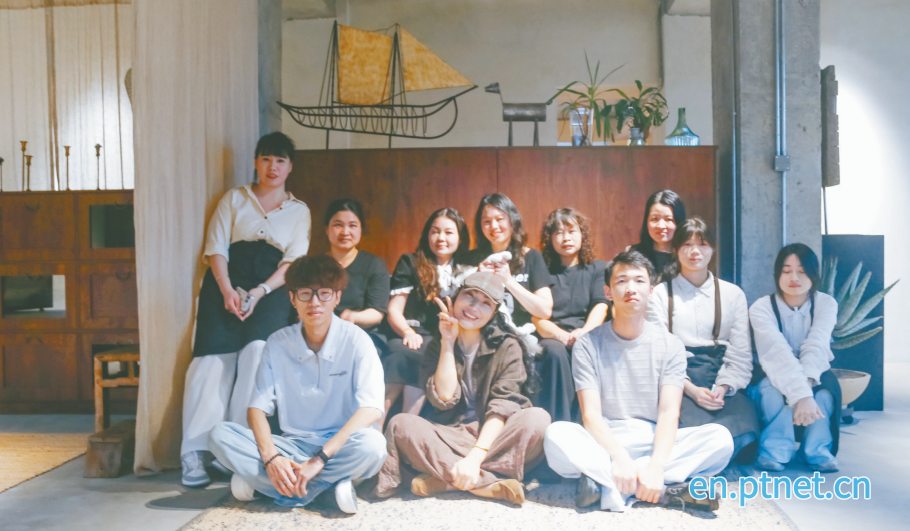
Xu Yaying (front center) with her partners
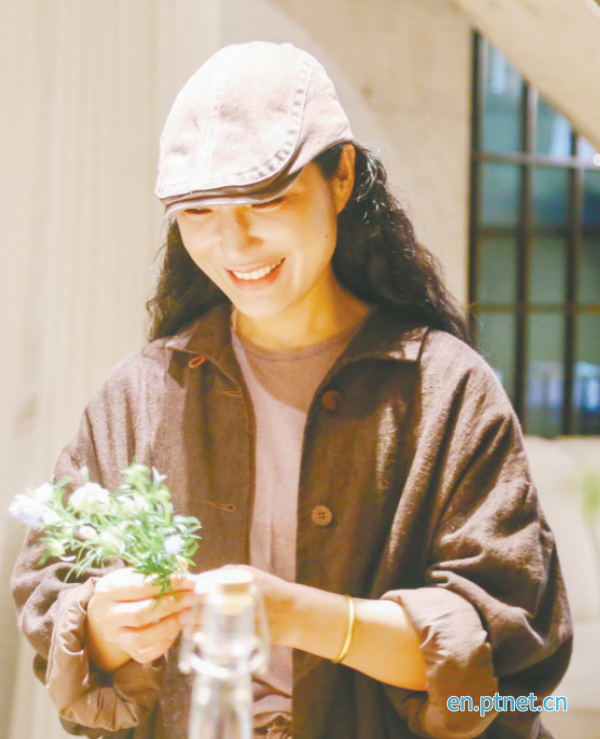
Xu Yaying arranging flowers
Xu Yaying wears many labels. To children, she is "Teacher Yaya," the art instructor whose classes focus less on copying drawings and more on seeing, touching and experiencing the world. Friends describe her as quiet and reserved, with a calm smile that hides a determined spirit. Longtime companions affectionately call her "Sister Ya," saying she creates a sense of ease wherever she goes and maintains genuine, lasting friendships.
Over the years, Xu has been an art teacher, café owner and clothing retailer. Through years of trial and error, she gradually found the path she truly wanted. Today, she runs Misa, a themed restaurant in Pingtan's old town district. Filled with warm lighting, flowers and thoughtfully prepared dishes, the restaurant has become a welcoming haven for diners.
The name itself carries meaning. "Mi" refers to the everyday rhythms of life — food, home and daily necessities — while "Sa" commemorates the age of 30, the point when she decided to begin again.
"All the experiences I've had became the confidence I rely on to keep moving forward," Xu said.
Returning home to inspire children through art
Born and raised in Pingtan, Xu once felt the island was too small to contain her artistic ambitions. She studied at Fuzhou Arts and Crafts School and later at Jingdezhen Ceramic University, building a strong foundation in fine arts. After graduation, she worked in graphic design and museum exhibition design in cities including Fuzhou and Shanghai, contributing to projects such as the Mei Lanfang Memorial Hall and the Chen Huai'ai Art Memorial Hall.
"When I was younger, I always wanted to leave and explore a bigger world because I thought opportunities elsewhere were greater," she said. "I never imagined I would return to Pingtan one day."
In 2012, at the age of 30, she returned home because of marriage and family. But adapting her professional experience to local conditions was not easy.
During a job interview for an art teaching position, Xu enthusiastically introduced her ideas of guided learning and immersive art education, only to find they were not embraced.
Walking out of the studio, she felt discouraged. Then a call from her younger sister changed everything.
"Why not open your own studio? You can do it," her sister said.
The words sparked something in her. That night, Xu repeatedly calculated costs and expenses. The next day, she borrowed 50,000 yuan ($6,900) from family members and rented a small storefront.
She painted walls, repaired old equipment and cleared out debris largely on her own. Summer heat turned the space into what felt like an oven, but she pressed on.
"This little hardship meant nothing," she recalled. "I was planting a dream."
When the studio first opened, only a handful of relatives' children enrolled. She carefully prepared every lesson and often took students outdoors.
When teaching children how to draw trees, she asked them to touch rough bark and observe sunlight filtering through leaves.
"What do you see? How would you draw it?" she would ask.
At first, not everyone accepted her approach, but Xu held firm. She believed observation mattered more than technique, and feelings mattered more than skills.
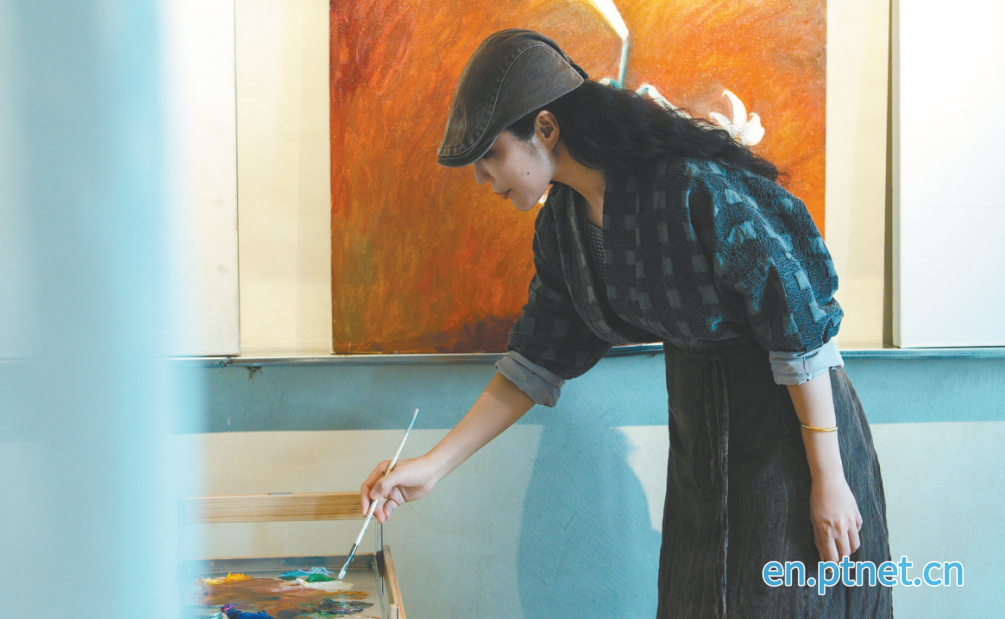
Xu Yaying painting
Over time, the studio grew to more than 400 students and a team of over 10 teachers.
"When I came back, it wasn't about proving anything," she said. "I simply wanted to use my experience to contribute something to art education in my hometown."
Giving old stone houses a second life
After the studio was established, Xu found herself drawn toward another idea.
She had long loved Pingtan's traditional stone houses and wanted to use her design background to breathe new life into abandoned spaces.
One day, she came across an old stone house. Intrigued by its rough stone walls and quiet atmosphere, she rented it as a satellite space for her art studio and a waiting area for parents.
Using her design skills, she preserved the stone walls and wooden beams while adding minimalist furnishings and tea sets.
Unexpectedly, visitors loved the space.
To balance teaching and experience, she moved classes to another area and opened the renovated building to the public as Waiting for You Café. It became one of Pingtan's earliest stone-house cafés and an early local social media sensation.
"When I create a space, business is never my first thought," Xu said. "I care first about whether it feels beautiful, comfortable and meaningful."
Later, after leaving the café partnership and returning her focus to art education, she discovered another aging stone house with two friends.
The three invested 100,000 yuan each and transformed it themselves, cleaning debris, repairing walls and decorating the courtyard with flowers and vintage furniture.
They called it Donglin No.13.
Initially intended as a private retreat, the space later evolved into a restaurant because of rising operating costs. Signature dishes such as mustard greens rice and seafood hotpot earned praise from diners.
The restaurant gained popularity, but Xu eventually felt something was missing.
"I wanted beauty," she said. "If a place feels too heavy and cluttered, I feel uncomfortable. A comfortable place has to feel right to me first."
Building spaces that reflect inner values
After running multiple projects at once — clothing shops, tea houses and more — Xu realized she had spread herself too thin.
"Managing a space is also managing your own state of mind," she said. "Once people become greedy, they lose direction."
Later, rent increases and partnership issues forced her to close Donglin No.13, a setback she described as one of her lowest moments.
But former customers continued sending messages asking where she would reopen.
"Are you coming back?" they asked.
That support convinced her to try again.
She first opened a smaller restaurant called Slowly before eventually finding a larger home in a three-story building dating back to the 1980s.
When she first walked into the space, she immediately knew it was right.
Friends questioned the decision.
"There's no scenery here, no crowds here. Where are your customers?" they asked.
But Xu trusted her instincts and rented the entire building, turning two floors into a restaurant while reserving the top floor as her studio.
The result was Misa.
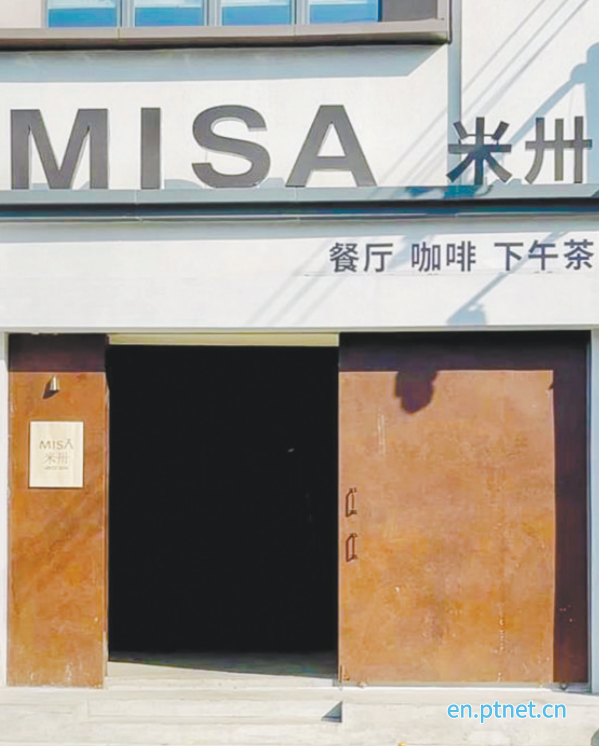
Misa restaurant
Warm lighting, wooden tables and fresh flowers create an atmosphere that feels more like a carefully composed artwork than a traditional restaurant. Each day, Xu personally arranges flowers before opening.
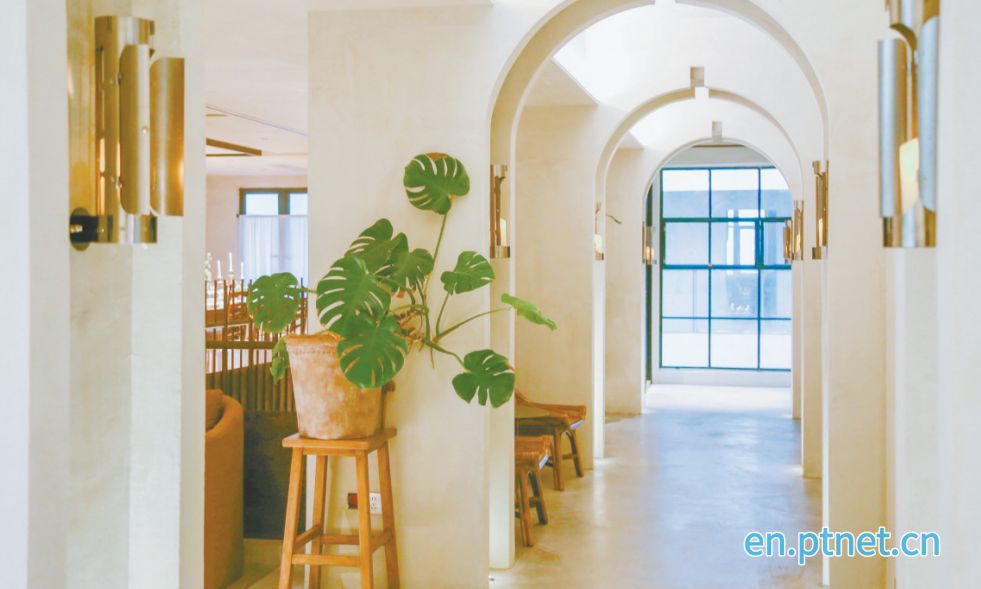
Restaurant interior
"I don't want to fill everything all at once," she said. "When inspiration comes, I add something little by little. I leave room intentionally — for myself as well."
Today, Xu divides her life into three parts: eight hours with her child, eight hours at work and eight hours for rest.
"There will always be more money to make," she said. "But my dreams matter more."
As rain fell outside her third-floor studio at the end of the interview, a newly arranged bouquet sat nearby, filling the room with a subtle fragrance.
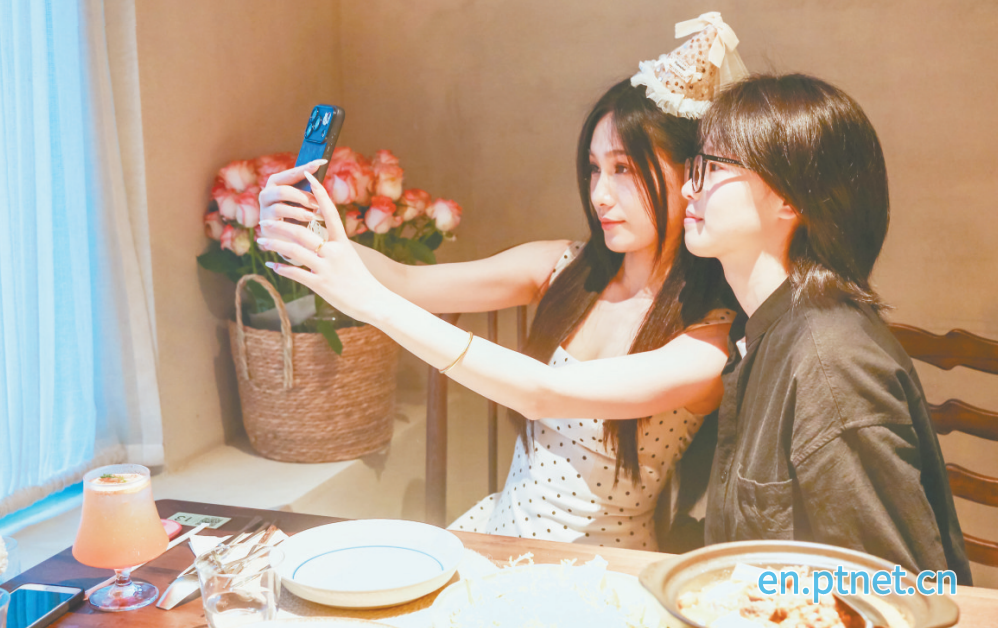
Visitors taking selfies at the restaurant
"Because of this place, people on the same wavelength eventually find their way here," she said. "Beautiful things attract beautiful people. That is enough."


 Fujian Public Security Registration Code: 35012802000271