
After seeing the world, she chose to come home
en.ptnet.cn | Updated:2026-06-15 | Lin Kongbo, Stephanie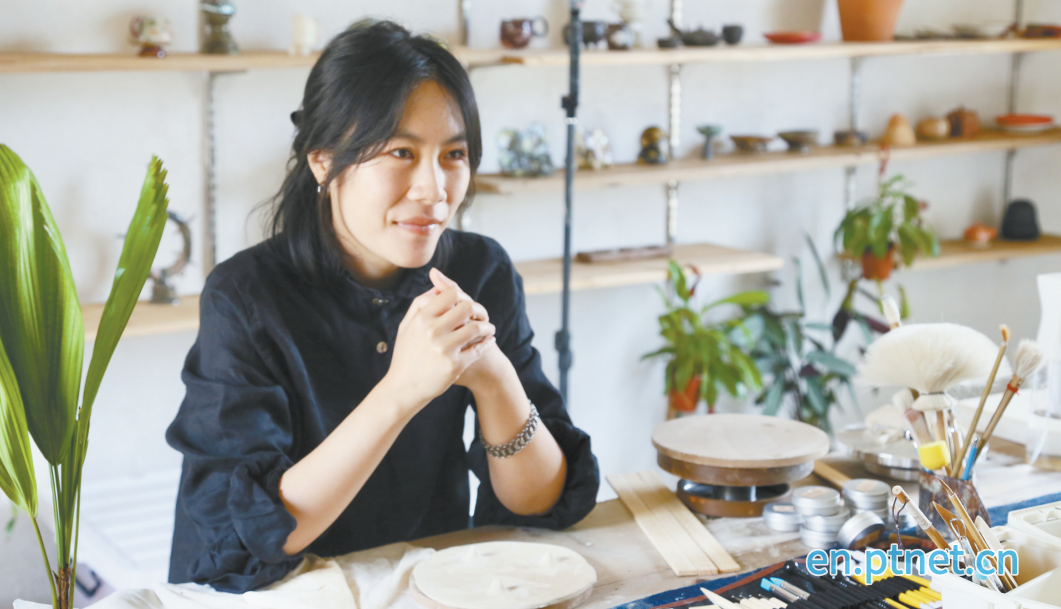
Lin Yehong
Born in 1996 on Caoyu Islet off Pingtan, now a rising international tourism island, Lin Yehong is known to friends simply as "Shuzi," meaning "tree." Her journey has taken her far from home—from commercial photography studios in Chongqing and Guangzhou to the halls of Beaux-Arts Nantes Saint-Nazaire, one of France's leading public art schools. Yet after years of pursuing opportunities abroad, she made an unexpected decision: to return to her island hometown and build a creative life from the ground up.
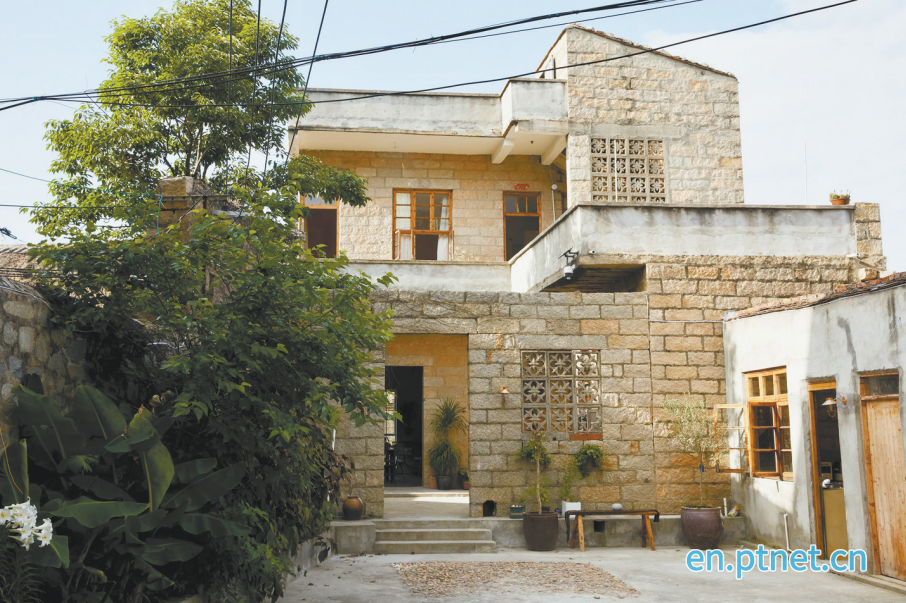
Exterior view of Shuzi Studio
Today, Shuzi runs Shuzi Studio in Pingtan, a restored stone house that serves as a photography space, pottery workshop and guesthouse. Rather than chasing the fast-paced commercial success of big cities, she has embraced a slower rhythm, finding inspiration in the quiet landscapes and cultural heritage of Pingtan.
Restoring an old stone house and preserving island memories
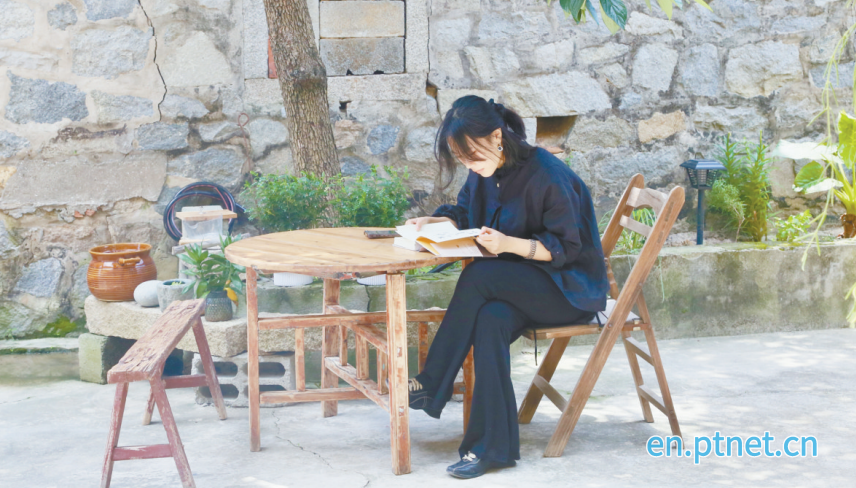
Lin Yehong reads under the persimmon tree.
Visitors entering the courtyard of Shuzi Studio are greeted by a persimmon tree whose shifting shadows dance across the stone walls. It was this sense of tranquility that first drew her to the property.
"When I saw the courtyard and the old tree, I knew immediately that this was the place," she recalled.
The house had stood vacant for years. The roof leaked, floor tiles were broken, and wooden beams were badly damaged. Working with a limited budget, Shuzi took on much of the restoration herself, learning techniques through online tutorials while overseeing major structural repairs.
One of her most distinctive projects was recreating traditional oyster-shell plaster walls, a building method once widely used in Pingtan. As a child, she remembered her grandmother's old house being coated with oyster-shell lime, which helped regulate temperature and resist moisture.
Determined to revive the technique, she collected discarded oyster shells from local villagers, washed and dried them, then had them ground into powder before mixing them with lime to create a natural wall finish. She documented the process online, attracting praise from followers intrigued by the blend of sustainability and cultural preservation.
Her father, Lin Min, initially questioned her decision to leave city jobs behind.
"He wondered what could possibly come from renovating an old house in Pingtan," she said with a smile.
Despite his doubts, he became her strongest supporter. He repaired windows, replaced roof tiles, mixed cement and helped install beams.
"Without my father's help, the studio probably wouldn't have been finished for another year," Shuzi said.
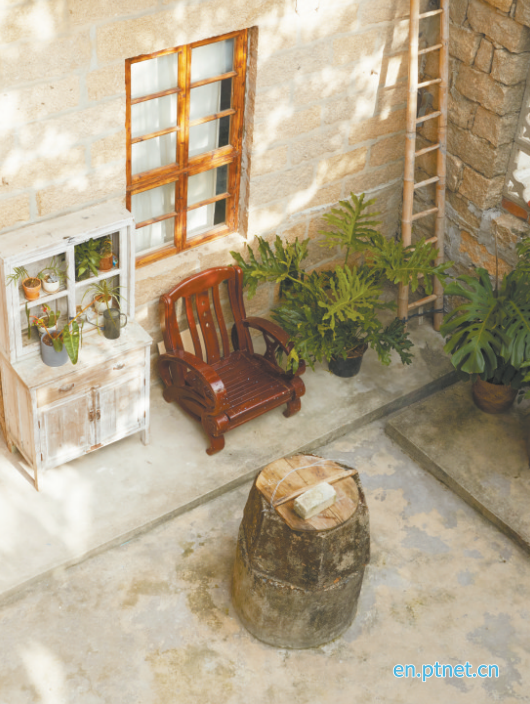
Courtyard of the studio
Today, the restored space retains its original stone walls and is furnished largely with repurposed materials. Old doors have been transformed into tabletops, second-hand cabinets have been restored, and worn furniture has been repaired rather than discarded. Handmade pottery and clay sculptures line the walls, reflecting her artistic vision and appreciation for the stories embedded in old objects.
Finding home through distance
Shuzi's childhood was shaped by island life. Growing up on Caoyu Islet, she spent her days surrounded by the sea and often visited her father, who worked on fishing rafts off the coast of Ningde.
After high school, she studied animation design in Xiamen and developed a passion for photography. Unable to afford a camera, she volunteered to photograph student activities simply for the chance to use one.
"Just pressing the shutter made me happy," she recalled.
After graduation, she worked as a portrait photographer in Chongqing before moving into commercial photography in Guangzhou. Although the work provided a stable income, repetitive assignments gradually eroded her enthusiasm.
At 27, she made another bold decision: to study in France.
"If I hadn't gone when I did, I might never have found the courage to do it later," she said.
The experience broadened her artistic horizons but also awakened a profound sense of homesickness. During the 2023 Spring Festival, she spent the holiday alone overseas for the first time. Watching her family's movements through a home security camera, she realized how deeply she missed home.
Inspired by that experience, she created a photographic work titled Spring Festival / Surveillance, incorporating images captured from the family camera.
"When you're abroad, it's not grand things you miss," she said. "It's the taste of oyster cakes, fish balls and everyday foods from home."
Living in France also exposed her to a different approach to life and art.
"The artists I met lived simply," she said. "They weren't constantly thinking about making money. They spent their lives creating. Looking back, I realized I had become too focused on commercial success."
That realization ultimately led her back to Pingtan.
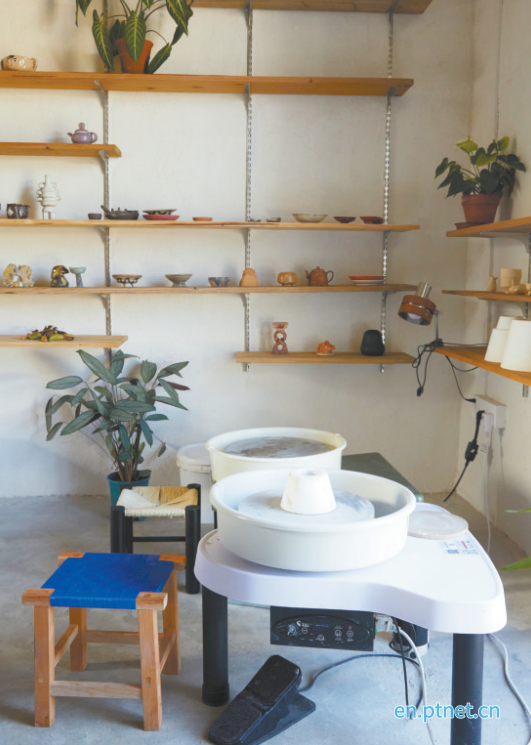
Pottery tools
"If I had stayed in France, it might have taken many more years to build a studio like this," she said. "Back in Pingtan, I can do it now."
Planting seeds for the future
Before opening her studio, Shuzi spent time visiting villages across Pingtan, including Houtian Village, where a growing community of young entrepreneurs, artists and creative business owners has emerged.
Seeing the island's cultural scene develop strengthened her belief that Pingtan could become fertile ground for artistic experimentation.
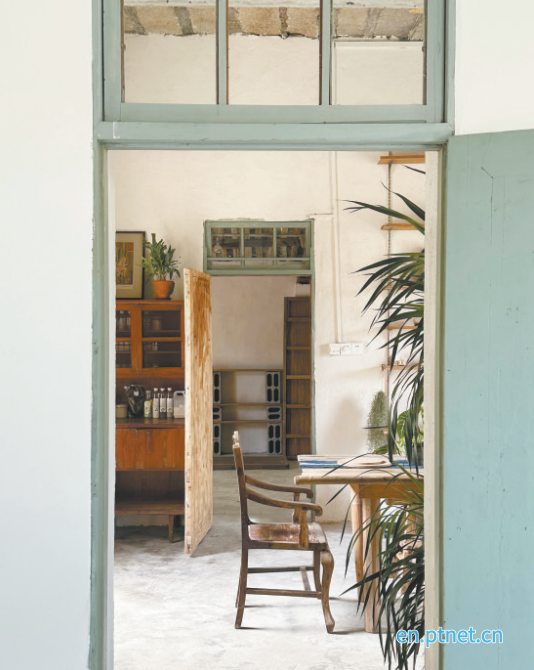
Vintage items
Shuzi Studio officially opened on May 1 this year. Visitor numbers remain modest, and promoting the business does not come naturally to her. For now, commercial photography helps support daily expenses while she pursues more personal projects.
Yet she remains optimistic.
"Pingtan's local arts community is still in its early stages," she said. "I'm excited about what it can become."
She is not alone. Across the island, more young people are returning home after years away. Some operate guesthouses, others create ceramics, produce documentaries or explore new forms of cultural expression.
What Shuzi hopes to see most is not the success of her own studio, but the growth of a wider creative community.
"I want many people to be doing this together," she said.
She believes more young islanders will return in the years ahead, bringing back new ideas, experiences and skills gathered from elsewhere. Together, they will plant different seeds in their hometown—and help them take root.


 Fujian Public Security Registration Code: 35012802000271